
Industrial plants rarely stop because of a failed bearing or a loose bolt. More often, production is interrupted because a worn rotor, damaged stator, or incorrectly ordered spare part leaves a progressing cavity pump out of service. If your facility operates a MONO PC Pumps G Range unit, understanding its model code and replacement components can save significant maintenance costs and prevent unnecessary downtime.
The MONO G Range is a compact series of progressing cavity pumps designed for smooth, positive displacement pumping of viscous liquids, slurries, and fluids containing suspended solids. Widely used in wastewater treatment, chemical processing, food manufacturing, agriculture, and OEM equipment, these pumps are valued for their reliability and simple construction. Just as importantly, many of their wear components, including rotors, stators, coupling rods, drive shafts, and mechanical seals, can be replaced individually, making maintenance far more economical than replacing an entire pump.
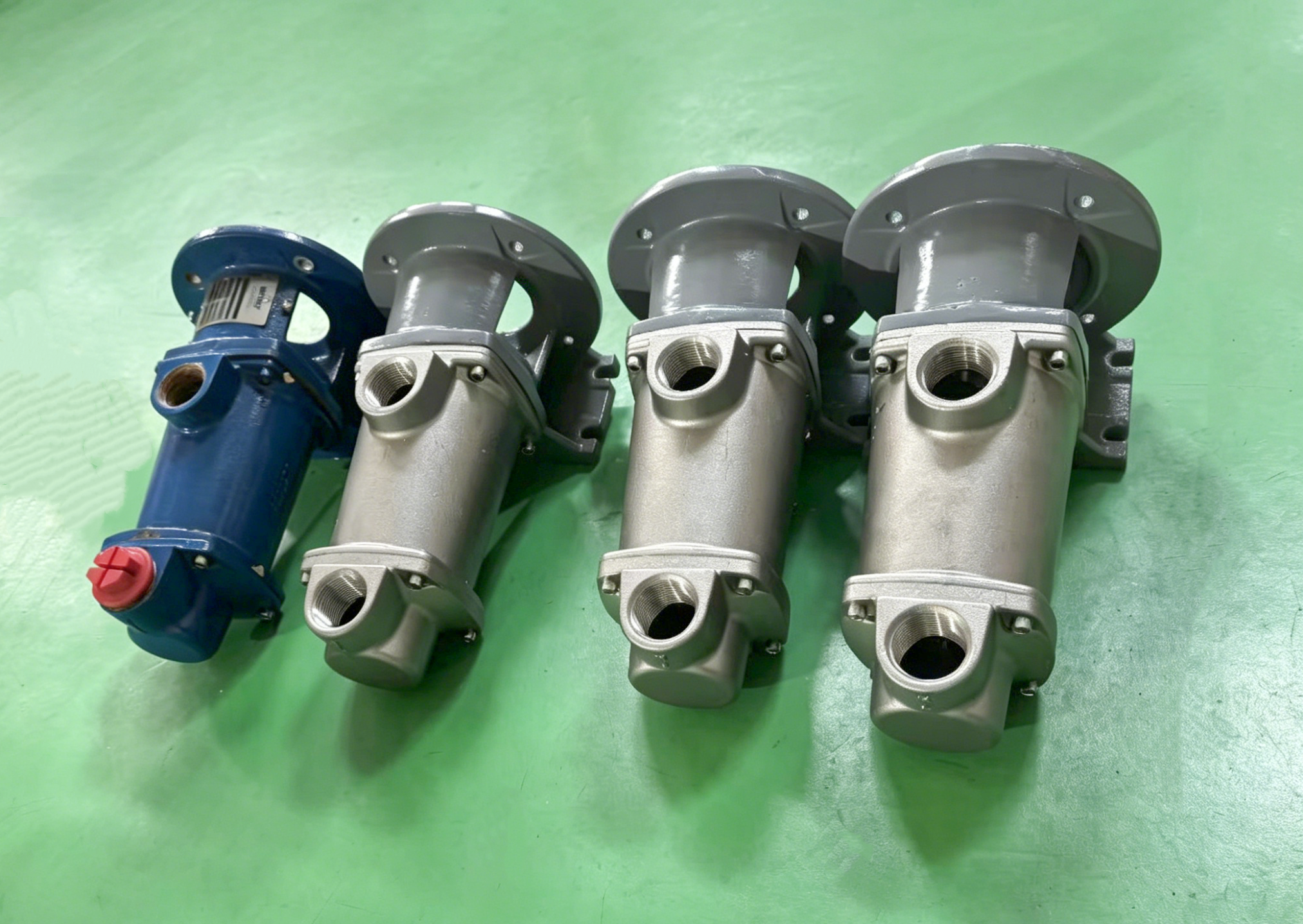
Table of Contents
- What Is the MONO G Range?
- Understanding GF, GG, and GH Models
- How to Read a MONO G Range Assembly Code
- Why the Complete Pump Code Matters
- Most Frequently Replaced G Range Spare Parts
- Bare Shaft Pumps and Complete Pump Replacements
- Choosing a Reliable Replacement Parts Supplier
- Final Thoughts
What Is the MONO G Range?
The MONO G Range is one of MONO’s classic compact progressing cavity pump families. It uses the proven rotor and stator principle to move fluid through sealed cavities, providing a nearly pulse-free flow that handles viscous, abrasive, and solids-laden media with minimal shear.
Historically, the G Range has been used in applications such as:
- Sludge transfer
- Polymer dosing
- Wastewater treatment
- Chemical metering
- Food ingredient handling
- Agricultural liquid transfer
- OEM processing equipment
Because of its modular construction, routine maintenance usually involves replacing only a few wear components rather than the complete pump.
Understanding GF, GG, and GH Models
One feature that often confuses buyers is the model naming convention. In the G Range, GF, GG, and GH are not random letters but identify different hydraulic families.
| Model | Approximate Maximum Capacity at 1750 rpm | Typical Application |
|---|---|---|
| GF | Around 1.3 m³/h | See below |
| GG | Around 1.9 m³/h | See below |
| GH | Around 3.5 m³/h | See below |
The design of the pumping element and the selection of suitable pump speeds allows this versatile pump to carry out a wide range of light industrial and agricultural duties, such as
- oily/water separators
- pumping of light fuel
- oil transfer of hot glues
- small solids in suspension
- polyelectrolyte dosing
Selecting the correct family is only the first step. To order 100% compatible spare parts or a replacement pump, the complete assembly code is even more important.
How to Read a MONO G Range Assembly Code
A code such as CGG123R3 contains valuable information about the pump’s construction.
| Code Element | Verified Meaning |
|---|---|
| C | Cast iron body material |
| GG | G Range hydraulic family |
| Remaining numbers and letters | Define the seal arrangement, drive arrangement, mark version, stator specification, rotating parts, and optional factory variations |
Historical assembly documentation also includes examples such as:
- CGG123R3
- CGG233R1/H925
- CGH113R3/M
These examples demonstrate why quoting only “GG pump” is often insufficient when ordering spare parts.
Why the Complete Pump Code Matters
Imagine two pumps sitting side by side in a wastewater treatment plant. Both belong to the GG family, but one has a packed gland while the other uses a mechanical seal. One may use a different rotating assembly or include a factory variation that changes component compatibility.
Ordering parts based solely on the family designation can therefore lead to incorrect deliveries.
When requesting quotations for replacement parts, please always provide:
- Complete assembly code
- Nameplate photograph
- Serial number (if available)
- Rotor material (if known)
- Stator material (if known)
Photos of the existing pump help suppliers identify the correct configuration quickly and accurately.
Most Frequently Replaced G Range Spare Parts
The progressing cavity design is highly durable, but several components naturally wear during operation.
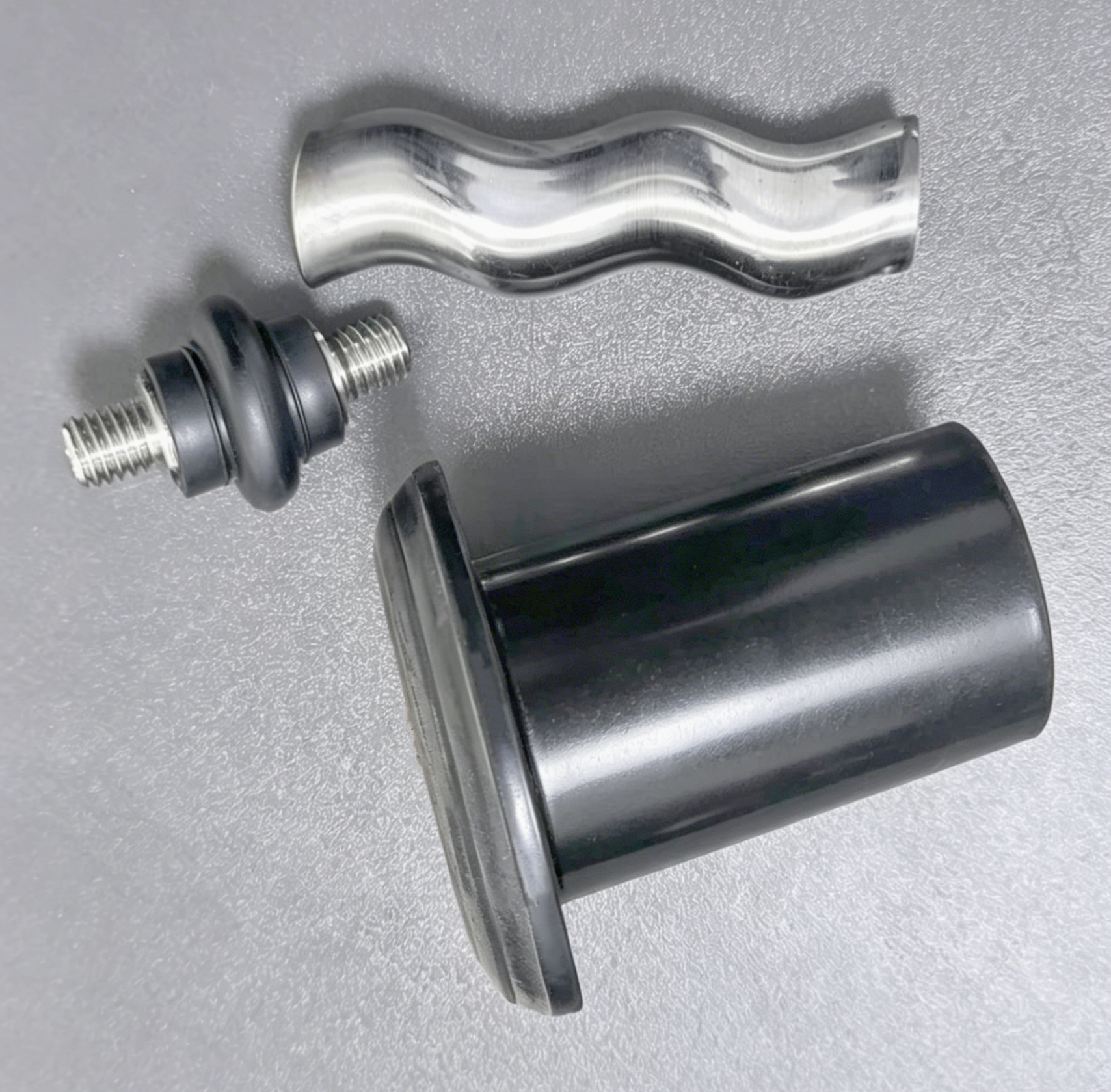
The most commonly replaced pump parts include:
- Rotor
- Stator
- Coupling rod
- Drive shaft (plug-in shaft)
- Mechanical seal/Gland packing
- Universal joint set items
Replacing these wear parts at the right intervals restores pump efficiency and extends service life without investing in a complete new unit. Explore our full range of MONO pump spare parts.
Bare Shaft Pumps and Complete Pump Replacements
Not every maintenance project requires replacing individual components. In some situations, installing a bare shaft pump or a complete pump assembly is the more economical solution, especially when multiple internal components have reached the end of their service life.
Many industrial users therefore choose a combination of maintenance strategies:
- Replace only the rotor and stator when wear is limited.
- Replace the complete rotating assembly when several internal parts are worn.
- Install a bareshaft pump while reusing the existing drive.
- Upgrade to a complete pump package when extensive refurbishment would not be cost-effective.
Choosing a Reliable Replacement Parts Supplier
Whether purchasing OEM or 100% compatible components, precision manufacturing and dimensional accuracy are critical. Even small deviations in rotor geometry or stator dimensions can affect flow rate, pressure capability, and service life.
A qualified supplier should be able to provide 100% compatible replacement components for MONO G Range pumps, including:
- Rotors
- Stators
- Coupling rods
- Drive shafts
- Mechanical seals
- Universal joint assemblies
- Bare shaft pumps
- Complete pump units
Providing your complete G Range assembly code, such as CGG123R3 or CGH113R3/M, greatly improves identification accuracy and helps ensure the supplied alternative pump parts match the original pump configuration.
Final Thoughts
The MONO G Range remains a trusted solution for transferring challenging fluids in wastewater, chemical, food, agricultural, and industrial applications. Understanding the differences among GF, GG, and GH models, and knowing how to interpret assembly codes such as CGG123R3, can simplify maintenance planning and prevent costly ordering mistakes.
For plants seeking to reduce downtime and maintenance costs, sourcing high-quality 100% compatible alternative spare parts, bare shaft pumps, or complete progressing cavity pumps can be a practical and economical approach, especially when supported by accurate model identification and experienced technical assistance. Top Level Intl. team is just such a reliable partner for you. Contact us now for any inquiries or questions. Our team is ready to serve you at any time.


